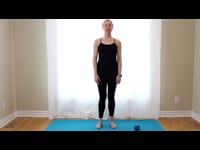
Tension is a Top Down Problem: Changing our Target(s) with Exercise

Tension is a Top Down Problem: Changing our Target(s) with Exercise
This course includes
The instructors
Overview
Muscle tension often plays a central role in persistent musculoskeletal discomfort — from neck and low back pain to pelvic tension syndromes. Rather than focusing solely on peripheral structures, this course reframes tension as a top‑down nervous system phenomenon. You’ll explore how altered sensory‑motor processing can maintain tension and learn how targeted exercises can help retrain the brain’s representation of the body to reduce protective “tightness.”
This course is part of a larger series. You can find all of the courses in this series by going here.
What You’ll Learn
- Why tension isn’t just about “tight muscles”
Understand how the brain’s sensory‑motor maps influence muscle activation and protective guarding, especially when nociplastic or sensory‑motor smudging occurs. - How to assess sensory‑motor changes clinically
Gain insight into using tools like the Fremantle Awareness Questionnaire to evaluate altered body perception — a key step in understanding tension beyond traditional assessment methods. - Movement approaches that support nervous system retraining
Explore practical exercise strategies — including body awareness practices such as Qi Gong — that are designed to engage the nervous system in a non‑threatening way to build tolerance and flexibility.
Audience
This course is ideal for clinicians and movement professionals interested in:
-
Sensory‑motor retraining approaches
-
Applying pain science to exercise prescription
-
Broadening assessment and exercise strategies beyond structural models
-
Supporting patients with chronic muscle tension and stiffness
The instructors

BHSc (PT), CredMDT, CCMA
Carolyn is the co-owner of Reframe Rehab, a teaching company engaged in breaking down the barriers internationally between pelvic health, orthopaedics and pain science. Carolyn has practiced in orthopaedics and pelvic health for the past 37 years. She is a McKenzie Credentialled physiotherapist (1999), certified in acupuncture (2002), and obtained a certificate in Cognitive Behavioural Therapy (CBT) in 2017.
Carolyn received the YWCA Women of Distinction award (2004) and the distinguished Education Award from the OPA (2015). Carolyn was recently awarded the Medal of Distinction from the Canadian Physiotherapy Association in 2021 for her work in pelvic health and pain science.
Carolyn has been heavily involved in post-graduate pelvic health education, research in lumbopelvic pain, speaking at numerous international conferences and writing books and chapters for the past twenty years in pelvic health, orthopaedics and pain science.
Material included in this course
-
Tension is a Top Down Problem: Changing our Target(s) with Exercise
-
Welcome, Slides and Resources
-
Introduction
-
Questionnaires and Doing Things Differently
-
Qi Gong and Conclusion
-
Questions
-
References
-
Feedback
Patient exercises included in this course
-
Lower Qi Gong: Shortened Version